Wandtauchen in der Adria und den Kornaten
Zuletzt aktualisiert: 17. Juli 2026
Wenn wir auf dem Boot zu einer Wand in den Kornaten oder entlang der Murter-Küste fahren, erzählen wir normalerweise genau das hier. Unsere Wände sind keine tropischen Korallenriffe — es sind Kalksteinabbrüche ins tiefe Blau, mit Schwämmen, Gorgonien und Fischen in den Spalten. Bei ruhigem Meer ein echter Genuss; etwas mehr Aufmerksamkeit als am flachen Riff — aber nichts Gruseliges, wenn Sie wissen, worauf Sie sich einstellen.
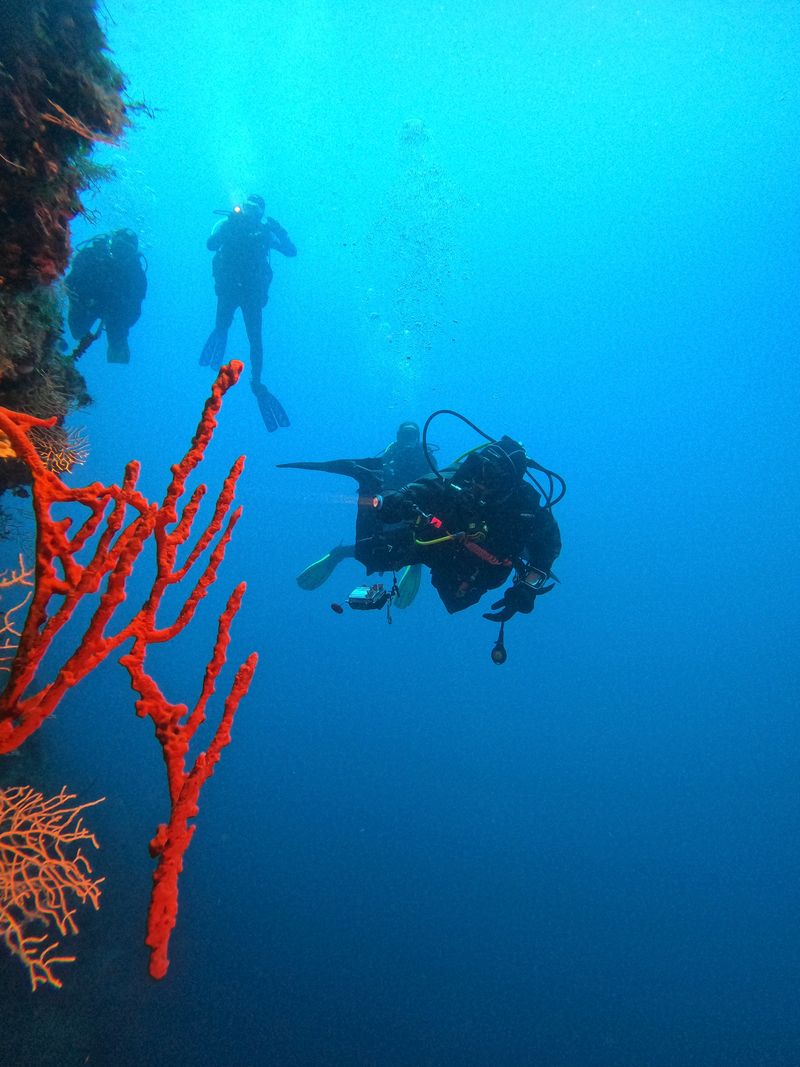
Stellen Sie sich vor: links Fels, rechts offenes Blau. Die Wand fällt unter Ihnen ab — mal sanft, mal senkrecht. Der Fels ist Kalkstein, voller Risse und kleiner Überhänge; dort verstecken sich oft Fische oder Leben, das direktes Sonnenlicht meidet. Bei guter Sicht sehen Sie die ganze Unterwasserlandschaft.
Die meisten Wandtauchgänge starten auf einem flachen Plateau oder gehen von dort weiter ab — nicht immer ein Sturz ab von der Oberfläche.
Gorgonien und Schwämme sitzen meist tiefer; Fischschwärme sehen Sie oft auch in den flachen Partien. In den Spalten finden Sie manchmal Nacktschnecken, Skorpionsfische oder Kraken. Wand auf der einen, Blau auf der anderen Seite — am Anfang kann das eindrucksvoll wirken, bis Sie eine einfache Orientierung haben: die Wandlinie, Ihren Buddy oder den Guide.
In den Kornaten ist das Wasser oft so klar, dass sich die ganze Wand vor Ihnen auftut. Das bleibt hängen.
Strömung — Schwer vorherzusagen. Was Sie an der Oberfläche sehen, gilt in der Tiefe nicht immer. Starke Strömung ist hier selten; wir wählen den Spot nach dem Wetter, nicht nach der Strömung.
Temperatur — Im Sommer vielleicht 24 °C an der Oberfläche; in der Tiefe oft rund 16 °C — die ganze Saison über. Sie treffen auf eine Thermoklinie — plötzliche Kälte, manchmal auch ein leicht anderer Wassereindruck. Normal hier; einfach darauf vorbereitet sein.
Der Fels wirkt kahl — ist er nicht — Schwämme und Gorgonien wachsen langsam. Halten Sie etwas Abstand zur Wand und achten Sie auf die Flossen — gute Tarierung erledigt den Rest.
Start und Ende auf dem Plateau. Meist beginnen wir dort und planen auch dort zu enden. Angenehme Tiefe zum Starten, und derselbe Platz eignet sich gut für den Sicherheitsstopp.
An der Wand bleiben. Wir schwimmen entlang der Flanke, nicht geradeaus ins Blau. Die Wand ist Ihre Referenz — für Tiefe, Richtung und die Gruppe. Quer durch offenes Wasser spart selten Zeit und macht es leicht, Spot oder Gruppe zu verlieren.
Wenn Sie im Blau sind — überqueren zum Boot, Aufstieg weg von der Wand — auf die Uhr achten. Ohne Wand neben sich steigt die Tiefe leise. Tiefe, Zeit und Luft regelmäßig checken.
Lampe — auf Wandtauchgängen mitnehmen, lohnt sich. Farben verblassen mit der Tiefe; Licht bringt Überhänge und Spalten zum Leben. Erwähnen wir auch im Morgenbriefing.
Nicht jede Wand ist ein tiefer Sturz — viele haben schöne Überhänge und Vorsprünge in flacherer Tiefe, die für sich schon den Tauchgang wert sind. Wo die Wand unter Ihnen weitergeht, müssen Sie ihr nicht in die Tiefe folgen. Flach an einer tiefen Wand zu bleiben ist normal — und meist der beste Plan.
Wir beenden den Tauchgang nach Zeit und Luft, nicht danach, „alles gesehen“ zu haben. Hängen Sie ein paar Meter von der Wand ab, damit Sie keinen Fels abschaben und Platz fürs Trimmen haben.
Noch nie an einer Wand? Sagen Sie es bei der Buchung oder beim Check-in. Wir finden einen passenden Spot und halten die Gruppe überschaubar — in der Regel vier bis sechs Taucher pro Guide, wie bei unseren anderen Bootstauchgängen.
Erste Bootsfahrt mit uns? Lesen Sie unseren Guide Was Sie erwartet, schauen Sie sich unsere Tauchplätze an oder kontaktieren Sie uns zum Buchen.